
Evening, after close
Crew starts as service ends and finishes by 10pm. Suits cafes, bakeries and lunch venues that close in the afternoon or early evening.
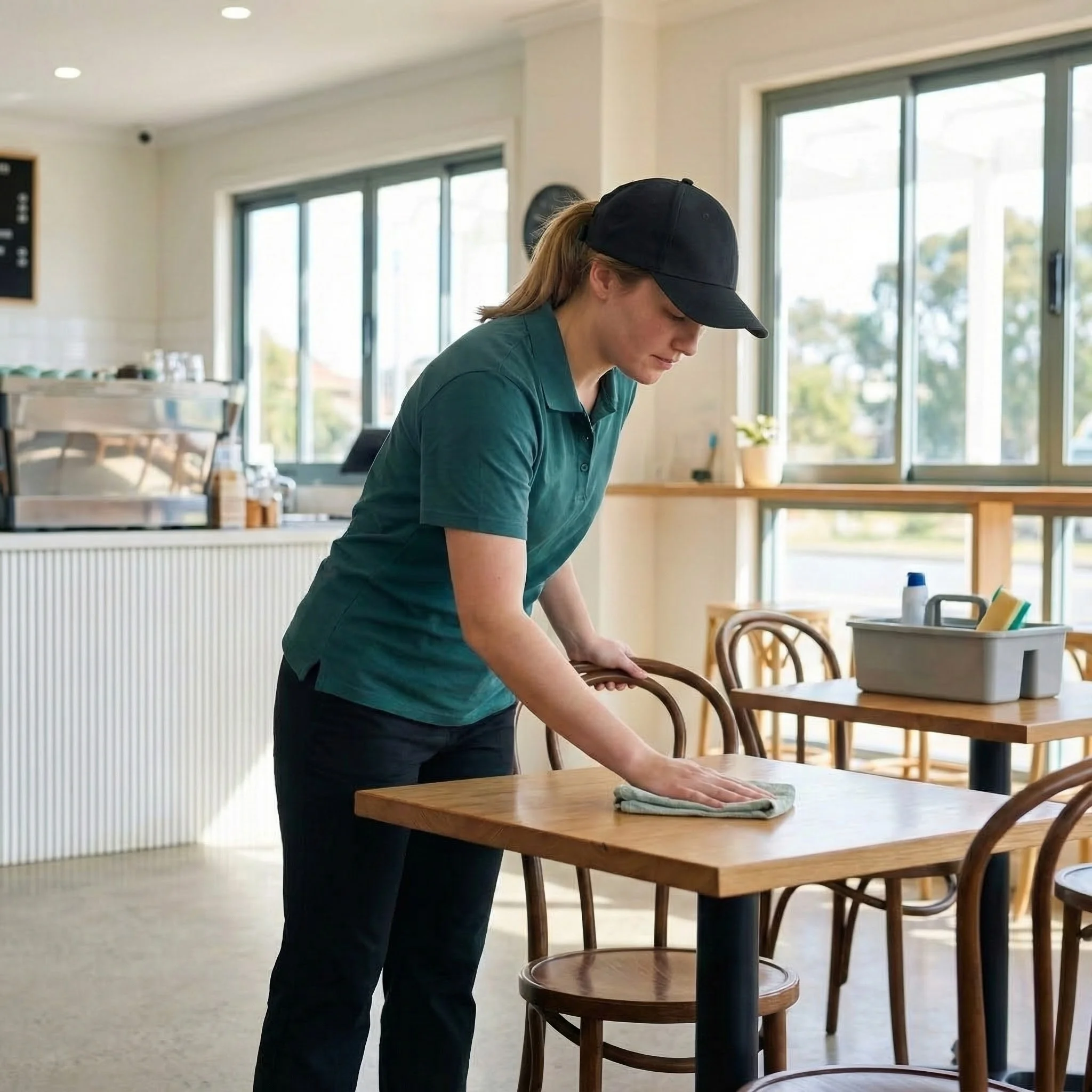
A kitchen can look spotless and still fail. The Food Standards Code treats cleaning and sanitising as two separate jobs, and a food safety inspector can check either. Restaurants, cafes, bars, bakeries and food courts, across seven regions.
We clean in the evening after you close, until 10pm, or from 6am before you open. A venue that trades past 10pm gets its clean the next morning before opening. Quoted after a walkthrough.
Because they do different things. Cleaning removes dirt, grease and food waste, while sanitising reduces microorganisms. You have to clean a surface before you can sanitise it.
Standard 3.2.2 requires food contact surfaces and equipment to be cleaned and sanitised, and the premises kept clean. A contractor who wipes a bench with detergent has done half the task.
Sanitiser also has to stay wet for the contact time on its label. Wiping it off early gives you a clean-looking bench and not much else.
Some work sits outside our scope. Sanitising between uses during service is kitchen staff work, and grease trap servicing goes to a licensed trade waste contractor, and pest control is a trade of its own. Canopy and duct cleaning we do offer, quoted separately from the regular clean.
For venues inside a shopping centre, see retail and showroom cleaning. For a fitout handover, see construction and builder final cleaning.
Inside our hours of 6am to 10pm, seven days, in the gap your trading leaves.
Crew starts as service ends and finishes by 10pm. Suits cafes, bakeries and lunch venues that close in the afternoon or early evening.
From 6am, before the first staff arrive. The right fit for restaurants and bars that trade past 10pm.
Behind equipment, cool room interiors and floor grout, booked on a set cycle.
An inspector may not give notice, so the record has to already exist.
Contact usStep 01
Who attended and when, logged against your venue every visit.
Step 02
Two steps in order, with contact time observed on food contact surfaces.
Step 03
Zone by zone with photos, ready for your food safety folder.
Step 04
Broken seals, blocked drains and pest signs reported rather than cleaned around.
The distinction is on your scope in writing, line by line.
Food contact surfaces carry a sanitise step. Floors, walls and front of house are cleaned, and the scope states which is which.
Handed over at the start and kept current.
Some food businesses have to show how they clean and sanitise. Our records are written so you can.
The national code sets the baseline. State and local authorities enforce it, and how often a venue is inspected depends on its risk.
A standing, dated record means you are not scrambling when an inspector walks in.
Four gaps that turn up in kitchens again and again.
The code draws a hard line between the two. Cleaning removes grease and food waste, sanitising reduces microorganisms, and you cannot do the second without the first.
Your scope names both, with the product and contact time against every food contact line, so the bench is sanitised rather than just tidy.
Under the cooking line, floor coving and drain grates are where grease and food waste collect out of sight.
We pull out what can be moved, clean behind it and lift the grates on a set cycle, and note the date each time.
Some venues may be asked to show their cleaning and sanitising practices, and many cannot because nothing was written down.
You get a dated, zone-by-zone record after every attendance, with photos. It goes into the food safety folder, which is where an inspector will look.
A venue that closes late and opens for breakfast has a short window, and it does not move because a contractor runs late.
We work 6am to 10pm, seven days. Close before 10pm and we clean that evening; trade later and we clean the next morning before you open.
Almost nobody fails on the bench they wiped. They fail on the drain nobody lifted and the record nobody kept.
Your licence, your name above the door.
Product and contact time on every food contact line.
Insurance cover in place for work on your premises.
Correct dilution, with Safety Data Sheets held.
Colour-coded equipment kept out of prep areas.
Seals, drains and pest signs raised, not covered.
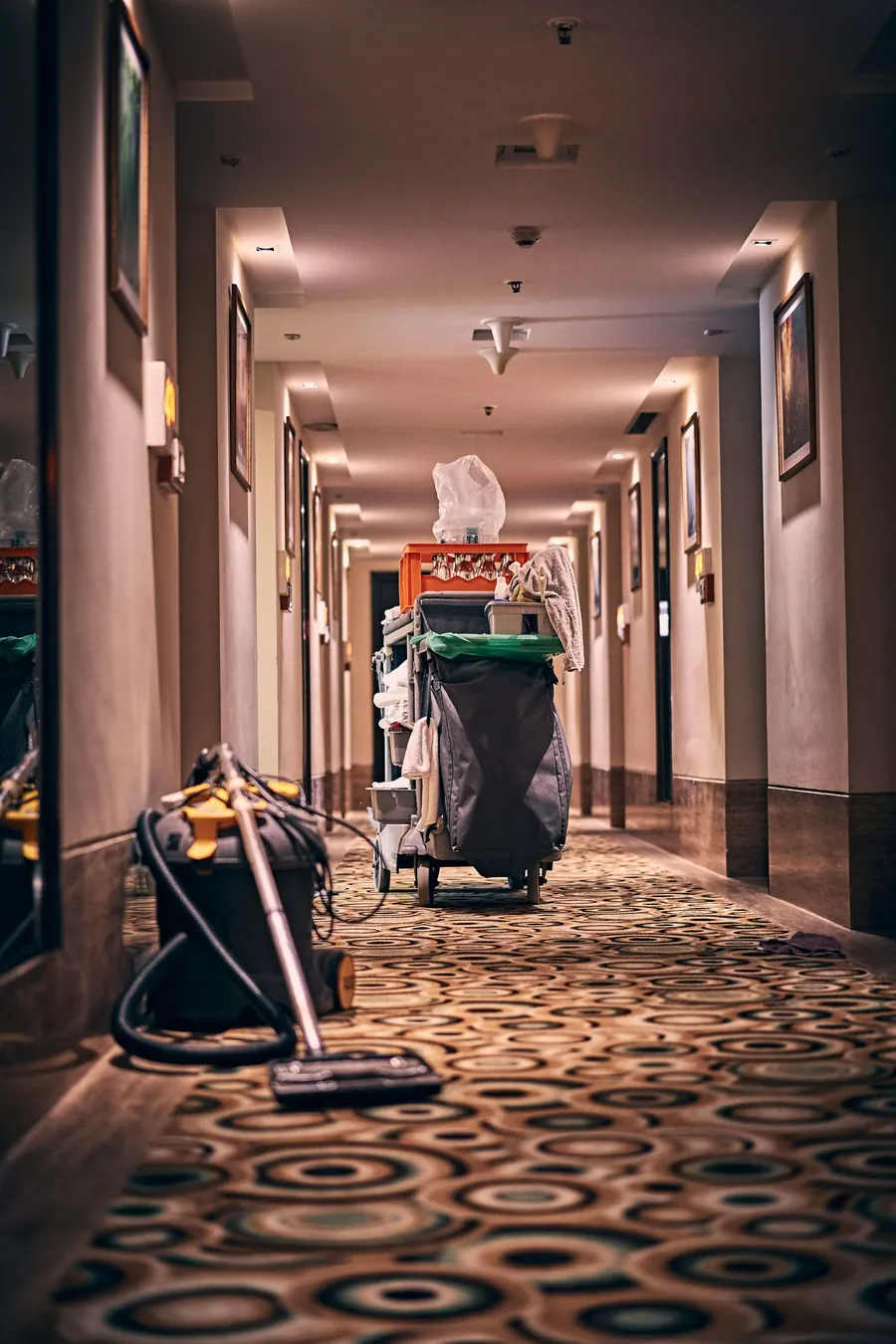
A dated, zone-by-zone report after each clean.
Four steps, and somebody sees the kitchen first.
Kitchen size, equipment, cover count, front of house and your trading hours.
Task list split into clean and sanitise, with frequencies and a fixed price.
Keys, alarms, chemical register, SDS pack and your reporting contact.
Scheduled attendances with dated reports for your food safety folder.
Cover count matters more than floor area. A small kitchen turning a lot of covers carries more grease than a larger, quieter one, and the scope has to reflect that rather than the square metres.
Periodic deep work is quoted as a separate cycle so the regular service stays predictable.
Scheduled and dated, because the dates are the point.
Line pulled out, floor and wall behind degreased.
Machine scrubbed where mopping stopped working. Tile & grout →
Shelving out, floor and walls cleaned, seals checked.
Upholstered seating, windows and high-level dusting. Upholstery cleaning →
Pressure washed where odour and pests start. Pressure washing →
Restaurants, cafes, bars, bakeries, clubs and food court tenancies in Darwin, Perth, Sydney, Melbourne, Brisbane, Adelaide and Tasmania. Tell us the address and we will arrange a walkthrough.
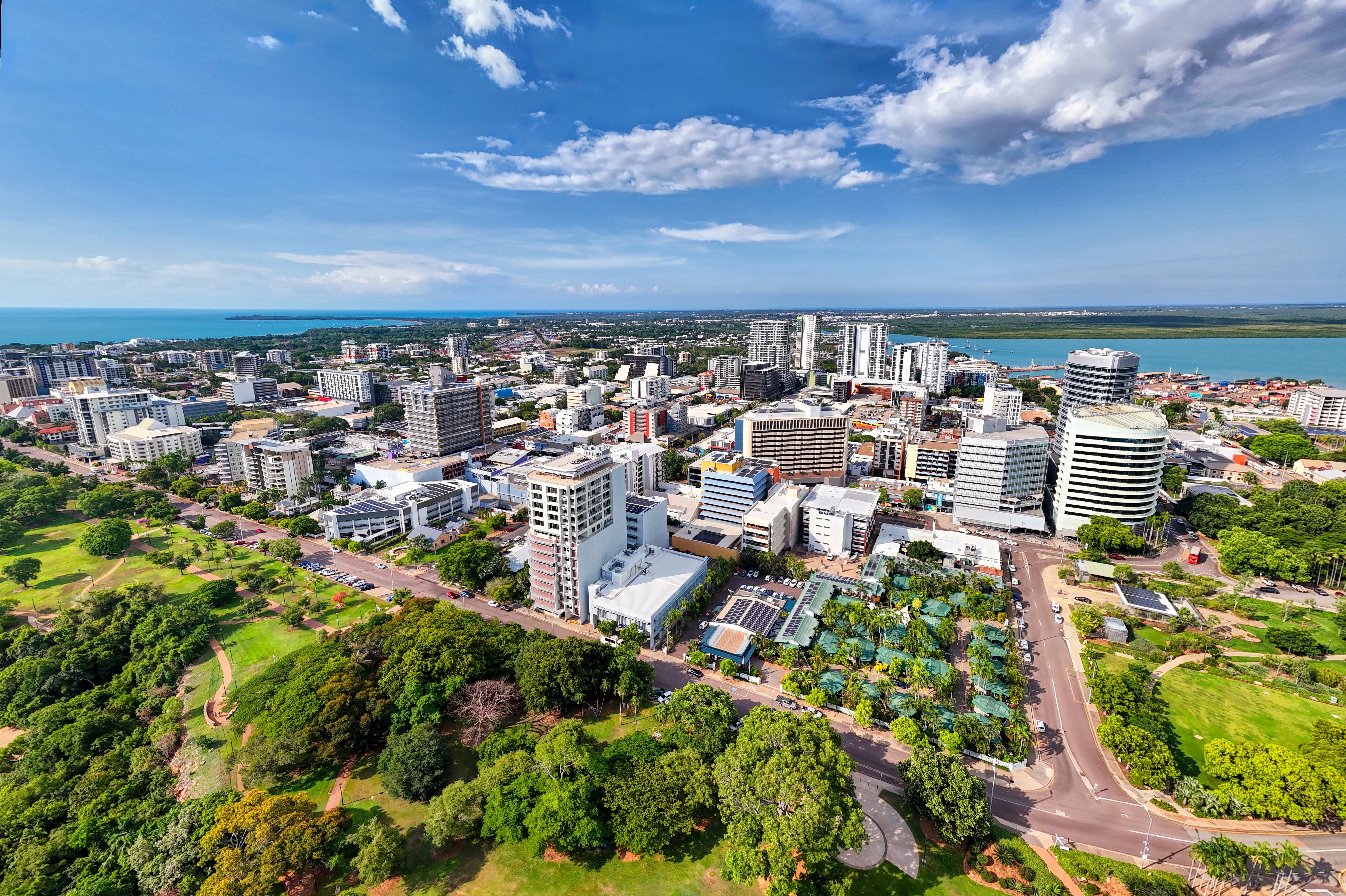
Northern Territory
36+ suburbs covered
Serving the Top End with professional cleaning services across Darwin and surrounding areas.
35+ suburbs covered
36+ suburbs covered
36+ suburbs covered
36+ suburbs covered
30+ suburbs covered
36+ suburbs covered
Darwin City
93 Smith St
Both, and the scope says which applies to each line. Food contact surfaces get the two-step treatment, with the sanitiser left wet for its full contact time.
Yes. The outer surfaces of the canopy are wiped as part of the kitchen clean, and a full canopy and duct clean, filters included, is quoted separately after we have seen the system. Grease builds up fastest above the fryers and the grill, so that is where we look first.
No, because grease traps sit under your trade waste agreement and are pumped out by a licensed contractor. We clean around the trap, keep the surrounding floor and drain grates clear, and flag it when something looks wrong.
That is what they are written for. You get a dated attendance record and a zone-by-zone report with photos after every visit.
6am to 10pm, seven days. If you close before 10pm we clean that evening; if you trade later, we clean from 6am the next morning before you open.
Yes, along with clubs and venues inside shopping centres. A food court tenancy usually has centre management rules on top, so tell us the setting at the walkthrough and we will scope it properly.
We stay until it's right
Our cleaners don't leave until you're happy with the work. For end of lease cleans, if you're not satisfied and tell us within 72 hours, we come back and re-clean.
Tell us about the venue and we will arrange a walkthrough and a free quote.
Monday to Sunday: 6:00 AM - 10:00 PM
Multiple Locations
Thanks for choosing Shining Services. Our team is reviewing your request and will send your personalised quote within 2 hours.
Need any help?
What happens next?