
Check your committee's spending limit
Every scheme sets its own limit on what the committee can approve without going to the owners. Check yours before you ask for a decision, so the quote goes to the right meeting.
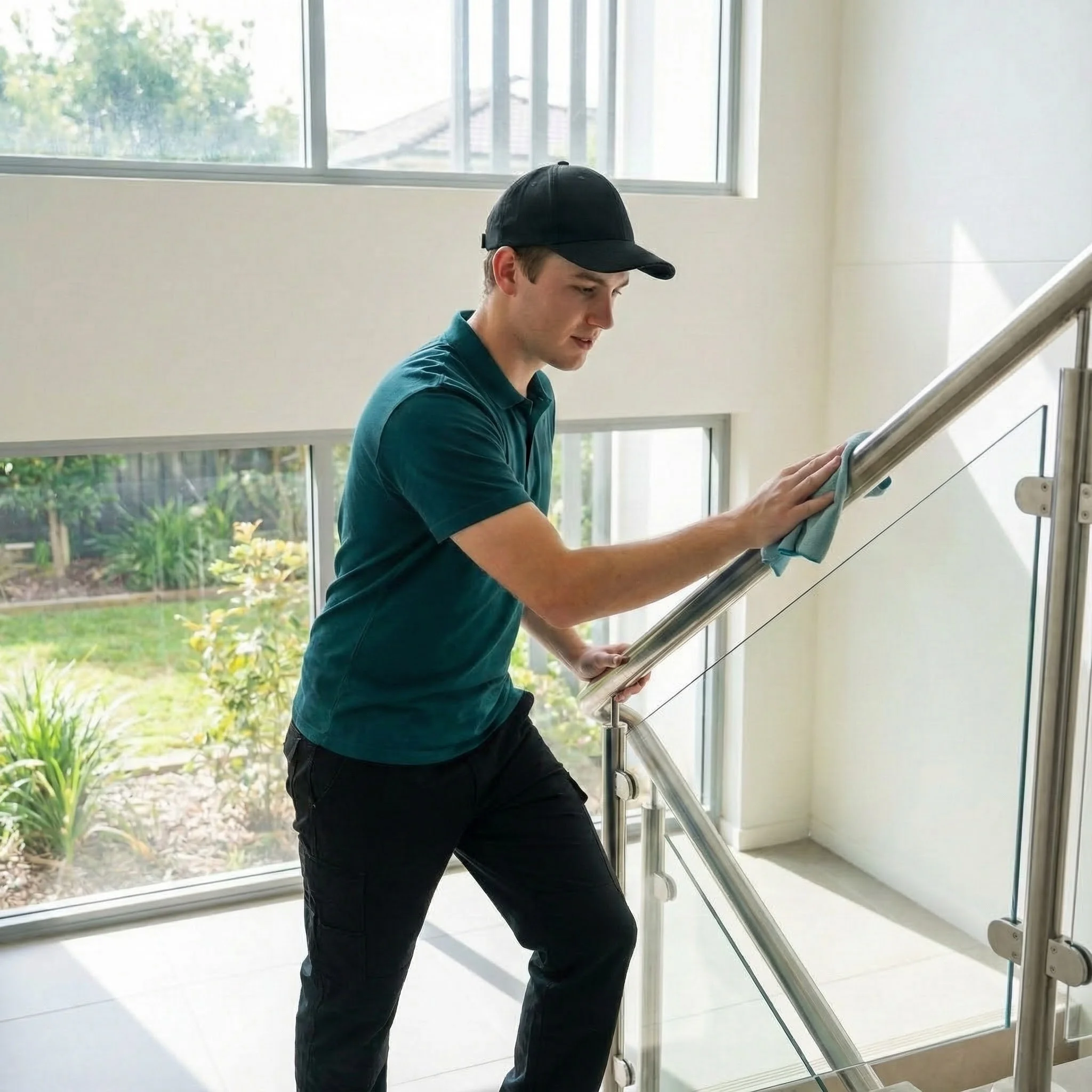
Common property cleaning for Darwin bodies corporate, unit title schemes and building managers. The scope arrives as a task list by frequency, so your committee can lay two quotes side by side and actually compare them.
One fixed monthly figure for the annual budget and a signed sign off after every visit for the minutes. Visits run early morning from 6am or in the evening until 10pm, at times that suit residents.
Several people get involved, and knowing who decides is what stops a quote sitting in an inbox for two months.
The body corporate is the party that contracts, and the committee makes day to day decisions within the spending limit your scheme has set. Above that limit, the decision goes back to the owners.
The body corporate manager usually sources the quotes and issues the paperwork, but the decision sits with the committee or the owners. The building manager or caretaker, where there is one, keeps an eye on the scope day to day.
The part that decides whether your quote ever gets voted on.
Every scheme sets its own limit on what the committee can approve without going to the owners. Check yours before you ask for a decision, so the quote goes to the right meeting.
That is why we write scope as a frequency table. If one quote is a paragraph of prose and the other is a schedule, owners cannot compare them and the vote gets deferred.
Cleaning sits in the annual budget your general meeting approves, which is why one fixed monthly figure works better than a per visit rate. It drops in as a single line.
A committee is not buying a clean. It is spending other people's levies and has to be able to show it did that properly.
Every line gets a frequency on the quote. Daily, twice weekly, weekly, fortnightly or monthly, never the words as required.
Two notes on the edges. Putting communal bins out to the kerb is an easy line to argue about, so it goes on the quote either way. And around a shared pool we never leave furniture, planters or equipment against the fence, where a child could use it to climb.
Four steps, and the last one is what your secretary attaches to the minutes.
Contact usStep 01
With you or your manager. We count levels, lifts, bins, car park bays and shared facilities, and note what the last cleaner was missing.
Step 02
Every area with a frequency against it, priced as a single monthly number for the budget.
Step 03
Early morning from 6am or evening until 10pm, on the days agreed, so lifts and stairwells are not blocked at peak times.
Step 04
A sign off sheet per visit and a dated photo report each month, written to be tabled at a committee meeting without editing.
Because shared circulation space with no airflow is where mould starts first.
From November to April the air stays humid for months, and shaded stairwells, breezeways and lift lobbies get little ventilation. So a schedule written for a southern building is wrong here: painted surfaces in those areas need checking every visit through the wet, not once a quarter.
Mould wiped off early stays a cleaning job. We start with a mild detergent on hard surfaces, and if it has gone beyond a surface clean, we tell you and quote mould cleaning as its own job.
Loose material on common property becomes debris in high winds, so the schedule shifts as the wet arrives.
When a storm drops a canopy across your car park, that is a call to us rather than a pile beside the bin compound for a week.
Six things, because a committee spending levies needs evidence, not reassurance.
We work out of 93 Smith Street in Darwin City, so a missed visit is a local call.
Every area, every frequency, in a format a second quote can be laid against.
Dated and signed, so the secretary can show what the levies paid for.
Photos by area, plus maintenance items we spotted, ready for a meeting pack.
We carry $10 million public liability insurance.
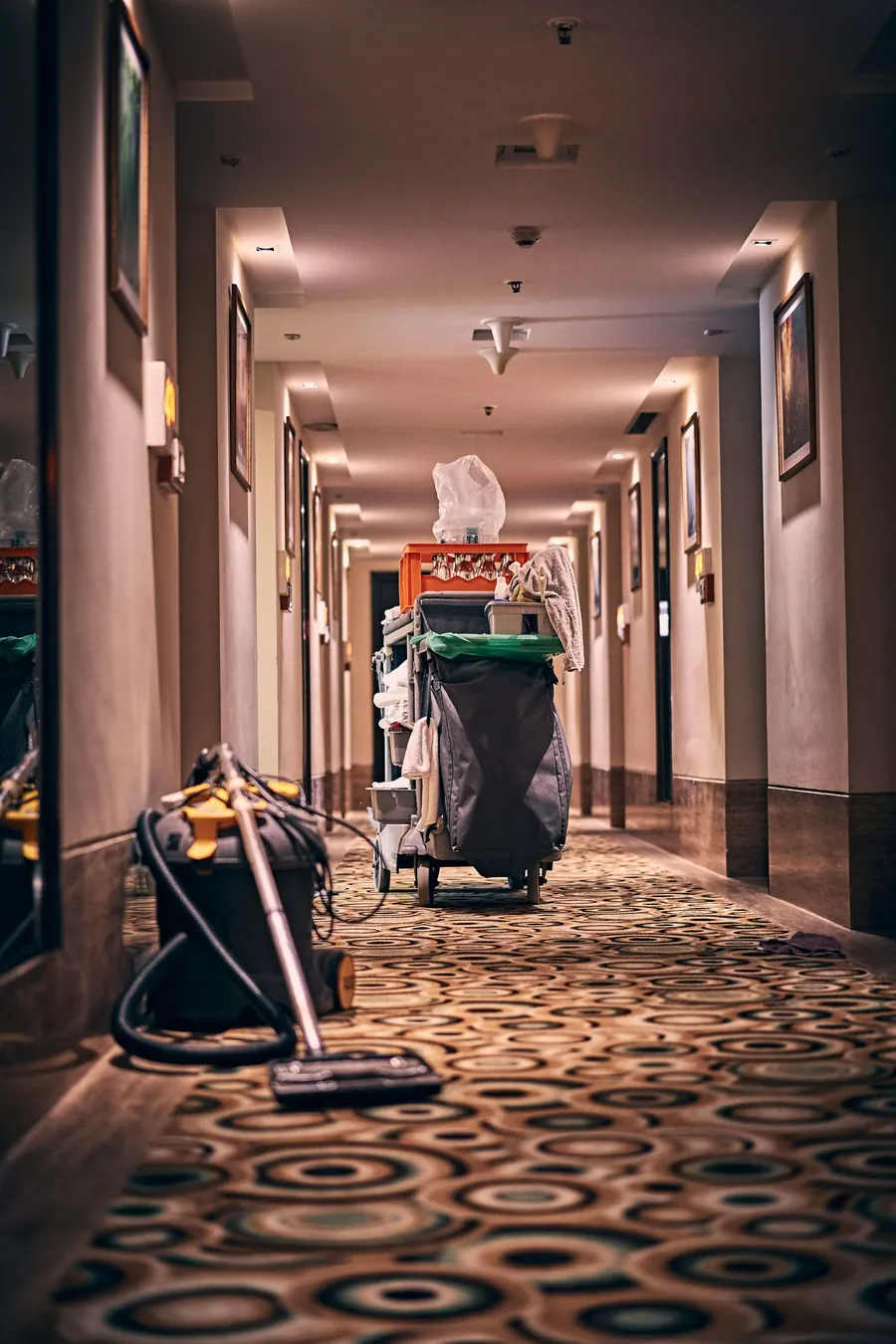
Our cleaners don't leave until you're happy with the work.
No rate card, because no two buildings are the same. We quote after walking the building, then give you one monthly figure.
Unit count, levels, lifts and whether there is a pool, gym or basement.
The size of the bin compound and car park, and the glass reachable from common areas.
How often each area is done, which moves the figure more than anything else.
Priced per visit, multiplied by the contracted visits and averaged over twelve months.
If a quote is well under the others, lay the scopes side by side by frequency and the gap usually explains itself. The walkthrough is free and carries no obligation.
Periodic work, quoted separately so the monthly figure stays stable.
Car park, bin compound, breezeways and paths, usually once or twice a year. From $195. See pressure washing
Common area glass reachable from the ground and walkways. Up to 10 windows from $170. See window cleaning
For stairwells and lobbies that have gone past a wipe down. From $315. See mould cleaning
Lobby and corridor carpet, once or twice a year, quoted after an inspection. See carpet cleaning
Foyer and breezeway tiling where mopping has stopped working. $38 per square metre. See tile and grout
Burst pipes and storm water into common corridors. Call out $265. See water damage drying
CBD towers, the northern suburbs unit blocks and Palmerston. Building outside these? Send the address and we will confirm the same day.
Coastal salt air coats glass and louvre blades, requiring extra care on tracks.
High residential rental movement makes bond cleaning very common across these suburbs.
Larger family blocks and sheds often combine regular cleans with outdoor pressure washing.
It is quoted after we walk the building rather than off a rate card, because unit count, levels, lifts, outside areas and frequency all move the number. You get one fixed monthly figure in writing before anything starts.
It depends on the spending limit your own scheme has set for the committee. Check that first, and if the contract is above it, our frequency table is ready to go into the meeting papers beside any other quote.
Yes, and it is how we prefer to quote. We price the scope per visit, multiply by the contracted visits and average it over twelve months, so the budget gets a single line.
Between 6am and 10pm, seven days. Most buildings choose an early morning visit before residents head out, or an evening visit after the busy hours.
By checking painted surfaces every visit through the wet, from November to April, rather than quarterly. A mild detergent comes first, and anything past a surface clean is quoted separately.
Both are in the routine scope. Putting bins out to the kerb is priced on the quote either way, so it never becomes an argument.
Tell us and we come back. The signed sheet and the monthly photo report usually settle what was and was not done, and our cleaners don't leave until you're happy with the work.
We stay until it's right
Our cleaners don't leave until you're happy with the work. For end of lease cleans, if you're not satisfied and tell us within 72 hours, we come back and re-clean.
Send the building address, the number of units and levels, and what facilities are on the common property. We walk it, write the scope as a frequency table and come back with one monthly figure.
Monday to Sunday: 6:00 AM - 10:00 PM
93 Smith St, Darwin City NT 0800
Thanks for choosing Shining Services. Our team is reviewing your request and will send your personalised quote within 2 hours.
Need any help?
What happens next?