
Daily or near daily
Bin rooms, lift lobbies and foyers in high rise towers. The areas every resident crosses, and the ones that generate the emails.
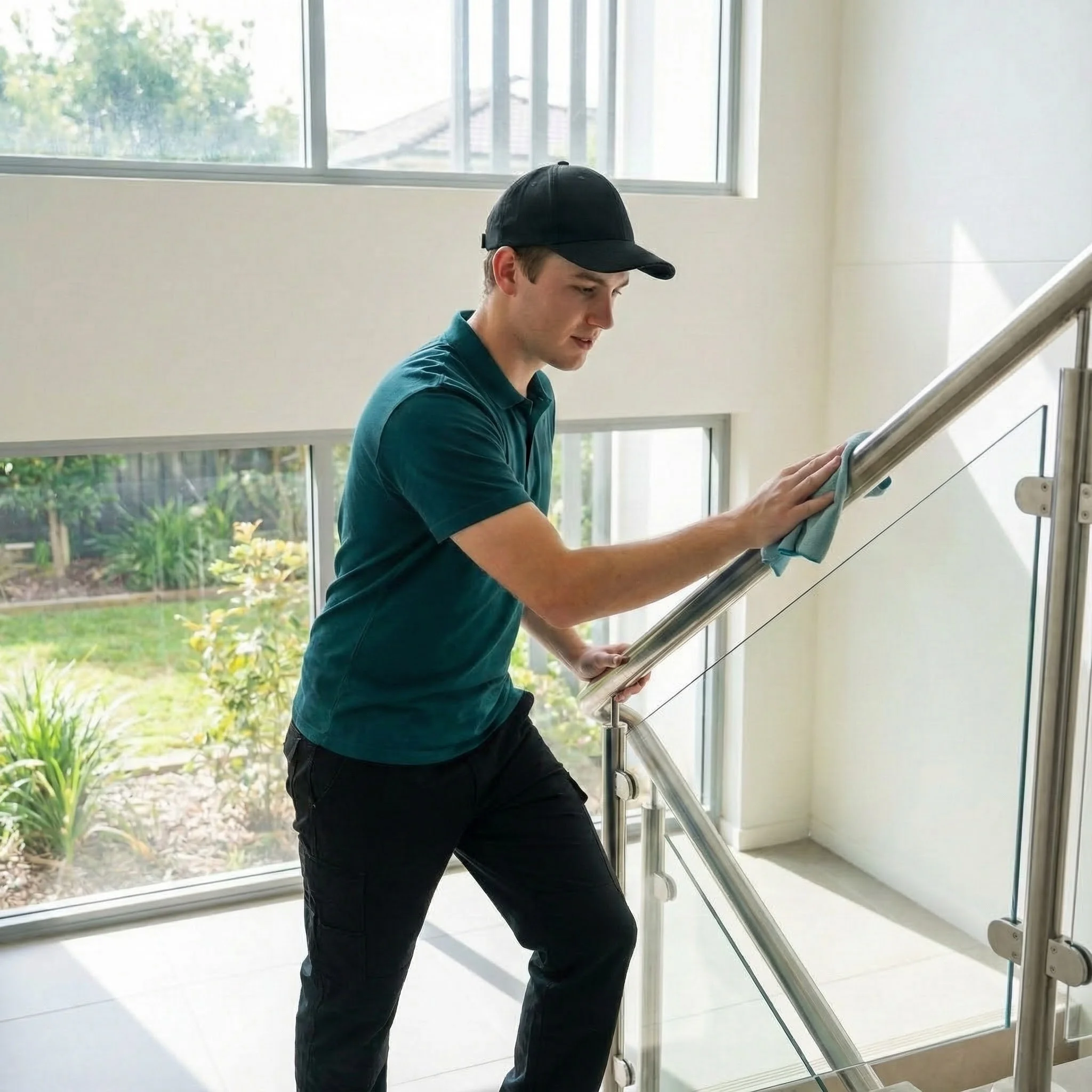
The bin room is where most resident complaints start, and it often gets ten minutes at the end of a weekly round. We give it its own line.
Common area cleaning covers foyers, lifts, stairwells and car parks. Each area gets its own frequency. The scope says where common property stops, so nobody argues about a balcony later. Every visit is photographed and dated for your committee.
Scheduled cleaning of foyers, lift lobbies and corridors. Stairwells, bin rooms and car parks as well, written as a scope with frequencies against each area.
The first thing the scope does is state the common property boundary. Balconies, courtyards and anything past a lot entry door sit on the owner's side. That gets written down before anyone starts.
Bin rooms drive the complaints. That is why they get their own line and their own frequency rather than whatever time is left at the end of a visit.
Commercial tenancies in a mixed use building are scoped separately. See office cleaning in Melbourne or retail and shop cleaning.
Set per area, because a bin room and a stairwell are not the same job.
Bin rooms, lift lobbies and foyers in high rise towers. The areas every resident crosses, and the ones that generate the emails.
Corridors, stairwells and letterbox areas in smaller blocks. The standard arrangement for walk-up buildings under twenty lots.
Car park sweeps, oil stain treatment and carpet, plus external glass and high dusting. Scheduled across the year rather than raised at a meeting.
Melbourne winter lifts the load on lobbies and stairwells. Wet foot traffic across a single entry floor is what wears it down.
Owners pay levies. They are entitled to see what the levy bought.
Contact usStep 01
Common property defined area by area, so nobody argues later about who cleans a courtyard.
Step 02
Arrival and departure recorded on every visit, which settles the question of whether anyone came.
Step 03
Bin room, foyer and lobby captured each visit and sent to your manager or committee contact.
Step 04
Twelve months of dated evidence, so the cleaning line is answered before anyone raises it.
Four areas, each with its own frequency in the written scope.
Anything past a lot entry door belongs to the owner. Balconies, courtyards and storage cage interiors sit outside the scope unless your owners corporation instructs otherwise in writing.
Sent with the quote rather than after you sign.
Cleaners cross exit paths and fire stairs on every visit. Anything blocked, propped or damaged gets reported to your manager the same day rather than left for an inspection to find.
Melbourne apartment stock splits into very different jobs, and the weather hits them all in the same way.
The common property is what the cleaning contract pays for. Writing down where it stops costs nothing and prevents most disputes.
Four things worth knowing before your next contract.
Common property is what your levies pay to clean, and balconies, courtyards and storage cage interiors usually sit with the owner. An undefined boundary turns into a dispute at the worst possible moment.
We write it down area by area before the first shift so nobody argues about it later.
The bin bay is where most complaints start, and ten minutes at the end of a weekly round will not hold it. Give it its own line and its own frequency.
Hours can often be moved from quieter areas, such as upper corridors, to pay for it.
Every resident crosses the same entry lobby with wet shoes, while the upper corridors stay relatively clean. Lifting the entry frequency through winter and easing it in summer moves the hours to where the wear actually happens.
Owners question what the cleaning levy buys. Attendance is logged and the bin room, foyer and lobby are photographed on every visit.
Twelve months of dated records answers the question before anyone raises it from the floor.
You are answerable to owners. Here is what sits behind the contract.
Common property defined area by area.
Insurance cover on every visit, certificate on request.
Its own frequency, not ten minutes of a visit.
Dated evidence that holds up at an AGM.
Blocked or propped fire doors flagged same day.
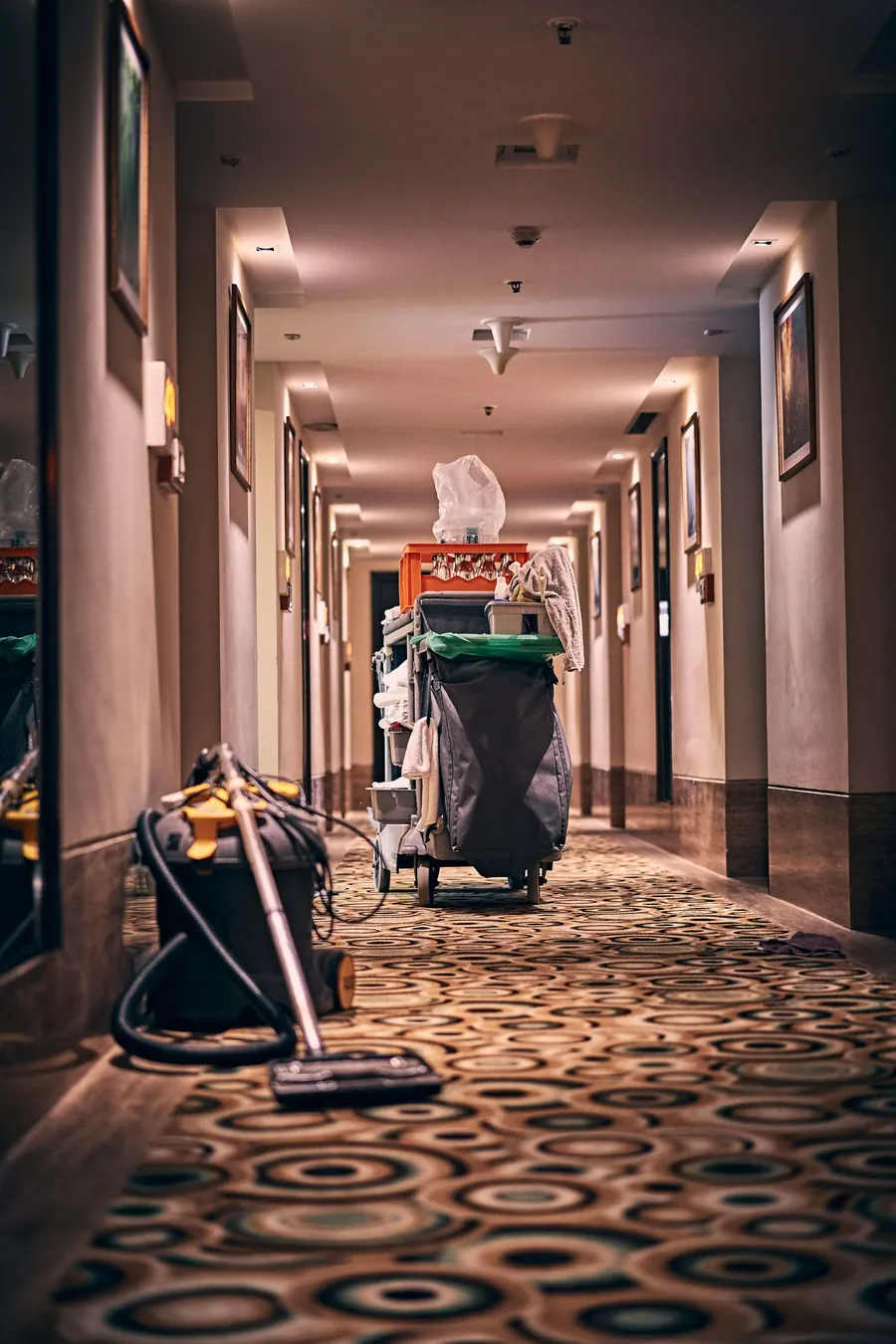
Our cleaners don't leave until you're happy with the work.
Four steps, usually inside a week. No obligation at any point.
Lot count, lift cores and bin arrangement, plus the car park and the boundary.
Area by area with frequencies, the boundary stated, at a fixed price.
Keys, fobs and alarm codes on a register, plus your manager and committee contacts.
Photographed each visit, with a twelve month record ready before your AGM.
Buildings are quoted after a walkthrough rather than from a rate card. Waste volume, lift cores and car park size drive the hours far more than the number of apartments does. The quote states the cleaner hours behind it.
Scheduled into the contract rather than raised at a committee meeting.
Traffic lanes and lift lobbies. Carpet cleaning →
Entry doors and ground floor. Window cleaning →
Oil stains and grates. Pressure washing →
Chute hoppers and bin wash, quarterly.
Cold cores after winter. Mould cleaning →
Between tenancies in a lot. End of lease cleaning →
Towers, walk-up blocks, mixed use buildings and townhouse owners corporations across metropolitan Melbourne. Managing a portfolio of buildings? Request a walkthrough and we will scope them together.
Victorian and Edwardian terraces, weatherboards, and converted warehouses where winter condensation and older timber floors shape the work.
High-rise apartment towers alongside heritage family homes where building access windows and owners corporation rules decide the schedule.
Family homes on large blocks where ducted heating registers, large floor plans, and outdoor paving are regularly booked together.
It is quoted after a walkthrough rather than from a rate card. Waste volume, lift cores and car park size drive the hours far more than the number of apartments does. The quote states the cleaner hours behind it, which is what a committee needs to compare tenders properly.
Broadly, the shared parts of the building outside the lots. In Victoria it is shown on the plan of subdivision, not decided by us or by the cleaner. Balconies, courtyards and the inside of storage cages usually sit with the owner, and we write the boundary into the scope area by area.
Because waste builds up every day, and ten minutes at the end of a weekly round will not hold a bin bay. Give it its own line and its own frequency and the complaints drop.
Attendance logged on every visit and photographs of the bin room, foyer and lobby. Twelve months of dated evidence sits ready before the meeting rather than being assembled after a question.
Yes, the same day. Our crews cross exit paths and fire stairs on every visit, so anything blocked, propped or damaged gets reported to your manager immediately. It costs nothing to include and it is expensive to have found during an inspection.
Yes, including sweeping, oil stain treatment and storage cage aisles. Basement work usually runs periodically rather than weekly, and it gets scheduled across the year.
Both, and we report to whichever you nominate. Managers usually want the record and the invoice reconciled, while committees want to see the areas they get asked about. The photo report goes to your nominated contact each visit either way.
Yes, and buildings in the same corridor are more efficient scoped together. A shared crew and schedule brings the per building cost down, which matters when every owners corporation has its own budget. Reporting still comes through per building.
We stay until it's right
Our cleaners don't leave until you're happy with the work. For end of lease cleans, if you're not satisfied and tell us within 72 hours, we come back and re-clean.
Tell us the lot count, the bin arrangement and when your AGM falls. We will walk the building and write the scope.
Monday to Sunday: 6:00 AM - 10:00 PM
Level 12, 123 Collins Street, Melbourne VIC 3000
Thanks for choosing Shining Services. Our team is reviewing your request and will send your personalised quote within 2 hours.
Need any help?
What happens next?